
CELEBRITY
BREAKING: Donald Trump Leaves a Journalist COMPLETELY SPEECHLESS as He Delivers a BRUTAL Response to His Question During a Tense Face-to-Face Exchange, And What Trump Says to the Reporter in Front of the Cameras Is Now Raising BIGGER Questions About Why Americans Are Still Allowing Him to Remain President

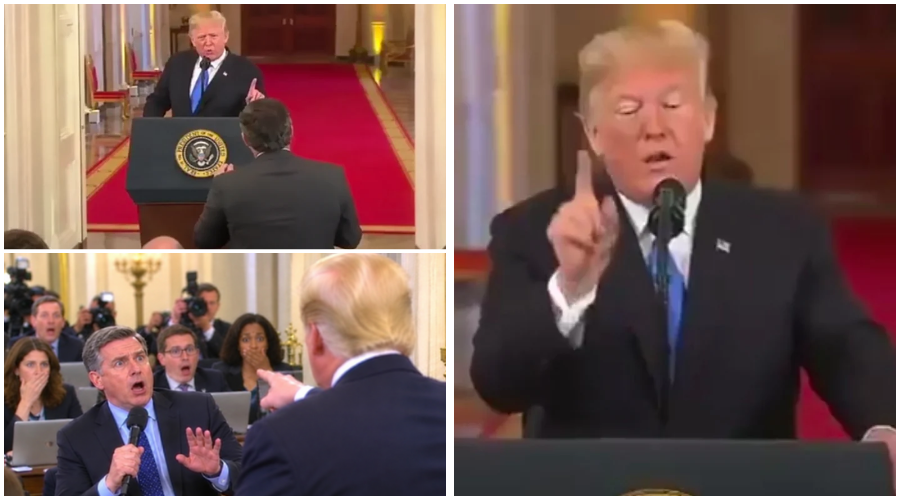
A tense face-to-face exchange involving U.S. President Donald Trump and a journalist has reignited discussions about presidential accountability, press freedom, and the increasingly confrontational relationship between the White House and the media.
The headline-grabbing moment, described as a particularly sharp response from Trump, raises questions about how political leaders respond to difficult questions and whether journalists can challenge those in power without turning press briefings into personal confrontations.
Trump has long been known for his combative communication style, particularly when responding to reporters who question his decisions, policies, public statements, and leadership. His exchanges with members of the press have frequently attracted national attention, with supporters and critics interpreting the same moments in dramatically different ways.
A Face-to-Face Exchange That Sparks Debate
Presidential exchanges with journalists are an important part of democratic accountability. Reporters are expected to ask difficult questions, seek clarification, and challenge statements that require further explanation.
When those exchanges become confrontational, however, attention can quickly shift away from the substance of the question and toward the president’s reaction.
The reported confrontation has prompted renewed interest in the balance between a president’s freedom to respond forcefully and the responsibility to address legitimate public concerns.
Without a verified transcript or recording of the specific exchange, the journalist’s exact question and Trump’s precise response cannot be established. Nevertheless, the broader debate surrounding confrontational presidential press interactions remains significant.
Trump’s Relationship With the Media Remains Controversial
Donald Trump’s relationship with journalists has been a defining feature of his political career.
Throughout his time in public office, he has frequently challenged media coverage, questioned the credibility of particular news organizations, and responded aggressively to questions he considers unfair or misleading.
His supporters often describe this approach as evidence that he refuses to be intimidated by established media institutions. They argue that a president should be able to challenge reporters and defend himself against what he considers inaccurate reporting.
Critics, however, believe that dismissing or attacking journalists can weaken public confidence in independent reporting. They argue that the press plays an essential role in examining government decisions and holding elected officials accountable.
This disagreement reflects a much larger political divide in the United States.
Why Presidential Accountability Matters
The controversy also raises an important question: What should Americans expect from someone holding the country’s highest elected office?
The American presidency carries enormous responsibilities, including overseeing the federal government, directing foreign policy, implementing legislation, and responding to national emergencies.
Because presidential decisions can affect millions of people, journalists have a responsibility to investigate those decisions and ask questions on behalf of the public.
A difficult question should not automatically be considered an act of hostility. Equally, a forceful response does not necessarily establish that a president has avoided accountability.
What matters is whether the public receives meaningful answers and whether claims made by political leaders can withstand independent scrutiny.
Why Americans Remain Divided Over Trump
Trump’s political influence has continued to generate intense reactions across the United States.
For many supporters, his direct communication style represents an alternative to traditional political language. They appreciate his willingness to challenge political institutions and confront journalists who they believe are hostile toward him.
For his opponents, the same approach raises concerns about political transparency, respect for democratic institutions, and the treatment of individuals who question presidential decisions.
These competing interpretations help explain why even a brief interaction between Trump and a reporter can become a major political talking point.
However, criticism of a president should be grounded in evidence, policy decisions, constitutional responsibilities, and verifiable public statements rather than assumptions about an individual exchange.
The Bigger Question Facing American Democracy
Beyond the personalities involved, the broader issue is the relationship between presidential power and public accountability.
The United States has a system of checks and balances designed to prevent excessive concentration of authority. Congress, the courts, independent journalism, elections, and other democratic institutions all play important roles in scrutinizing presidential leadership.
Americans also have the right to express approval or dissatisfaction through democratic participation, including elections and engagement with their elected representatives.
Whether someone supports Trump or strongly opposes his administration, the importance of asking difficult questions remains unchanged.
A president’s response to criticism can reveal much about political communication, but the most important test of leadership is how decisions are made, how responsibilities are fulfilled, and whether the public interest is protected.
The Conversation Is Far From Over
The debate surrounding Trump’s interactions with journalists is unlikely to disappear anytime soon.
As political tensions continue, Americans will remain divided over whether his confrontational approach represents strength and independence or an unnecessary obstacle to meaningful public accountability.
Ultimately, the public deserves accurate information about what was actually said during the reported exchange before drawing conclusions about the journalist’s reaction or the significance of Trump’s response.

FIRST LOOK: Prince Harry and Meghan Markle Melt Hearts as They Are Spotted Enjoying a Sweet Family Outing Through the Streets of Windsor with Princess Lilibet! But One Adorable Detail About Their Little Girl Is Getting EVEN MORE ATTENTION

38-year-old Travis Kelce NFL STAR was caught on a steamy GETAWAY with 69-year-old Madonna. Seems like these two might be more than just friends. 👀

BREAKING: Donald Trump Leaves a Journalist COMPLETELY SPEECHLESS as He Delivers a BRUTAL Response to His Question During a Tense Face-to-Face Exchange, And What Trump Says to the Reporter in Front of the Cameras Is Now Raising BIGGER Questions About Why Americans Are Still Allowing Him to Remain President

🚨 WOW! SpaceX says it will put a share of its stock into EVERY active Donald Trump Account in America, and Elon Musk will personally MATCH it, BILLIONS of dollars total are so far invested in our children within Trump Accounts, Elon and his team simply LOVE AMERICA ❤️ A Major Financial Commitment for America’s Next Generation

THE BIGGEST FINESSE IN HOLLYWOOD HISTORY? 🎬💰 Katie Holmes walked away with $0 while Tom Cruise grew his fortune from $250M to $600M. Now, she reportedly face legal tussle to settle “unfinished scores” over a FAKE prenup. How she lost out on millions—and the receipts behind her sudden return: 🧵 Read for More Details

Donald Trump Faces Heavy Backlash and Impeachment Calls After a Reporter Asks, “You Said Putin Is Your Friend. Russia Is Iran’s Biggest Ally. Do You Believe Putin Is a Friend to America?” and Trump Responds, “I Can’t Speak for America,” Before Making Another Shocking Remark About His Agreement With Putin That the US Is to Blame for the War in Ukraine, Raising Bigger Questions About His Presidency and Calls for His Immediate Resignation

Prince William Reportedly Plans to Strip Harry, Meghan, and Their Children of Royal Titles Upon Ascending the Throne

🚨 JUST IN: They ran on “affordability”—now incoming Democrats are weighing plans to roll back Trump’s tax cuts, slash the estate tax exemption, and reverse $1T+ in Medicaid and SNAP cuts come January. Meanwhile, Trump says gas prices conveniently crashed after the midterms. Good thing the veto pen still works. 🇺🇸

BREAKING: President Trump completely falls asleep and farts during the APEC summit in China, but cameras capture the reactions of world leaders behind him, while a microphone accidentally left on picks up something more than just farting, further confirming what Americans have been saying and raising bigger questions about why he is still president

TRUMP’S AI TAX BOMBSHELL! President Threatens Massive Tax Penalties on US Tech Giants Building AI Data Centres Overseas as Fears Grow Over Soaring AI Costs and a Deepening Economic Squeeze Across America!

🚨💔 ROYAL FAMILY DRAMA ERUPTS! 😱 MEGHAN MARKLE’S FATHER, THOMAS, REPORTEDLY MISTAKES HER FOR HIS ‘SISTER’ DURING A DISTURBING PSYCHIATRIC INTERVIEW ABOUT FAMILY DISPUTES! 💔 After a joyful outing with Prince Harry and their children, Meghan is reportedly left devastated by her father’s shocking accusations — BUT THE BIGGEST HEARTBREAK COMES WHEN HARRY ALLEGEDLY REFUSES TO COMFORT HIS TEARFUL WIFE AND CHILDREN! 😢👑 What began as a happy family day reportedly ends in sorrow!
