
CELEBRITY
🚨 JUST IN: They ran on “affordability”—now incoming Democrats are weighing plans to roll back Trump’s tax cuts, slash the estate tax exemption, and reverse $1T+ in Medicaid and SNAP cuts come January. Meanwhile, Trump says gas prices conveniently crashed after the midterms. Good thing the veto pen still works. 🇺🇸

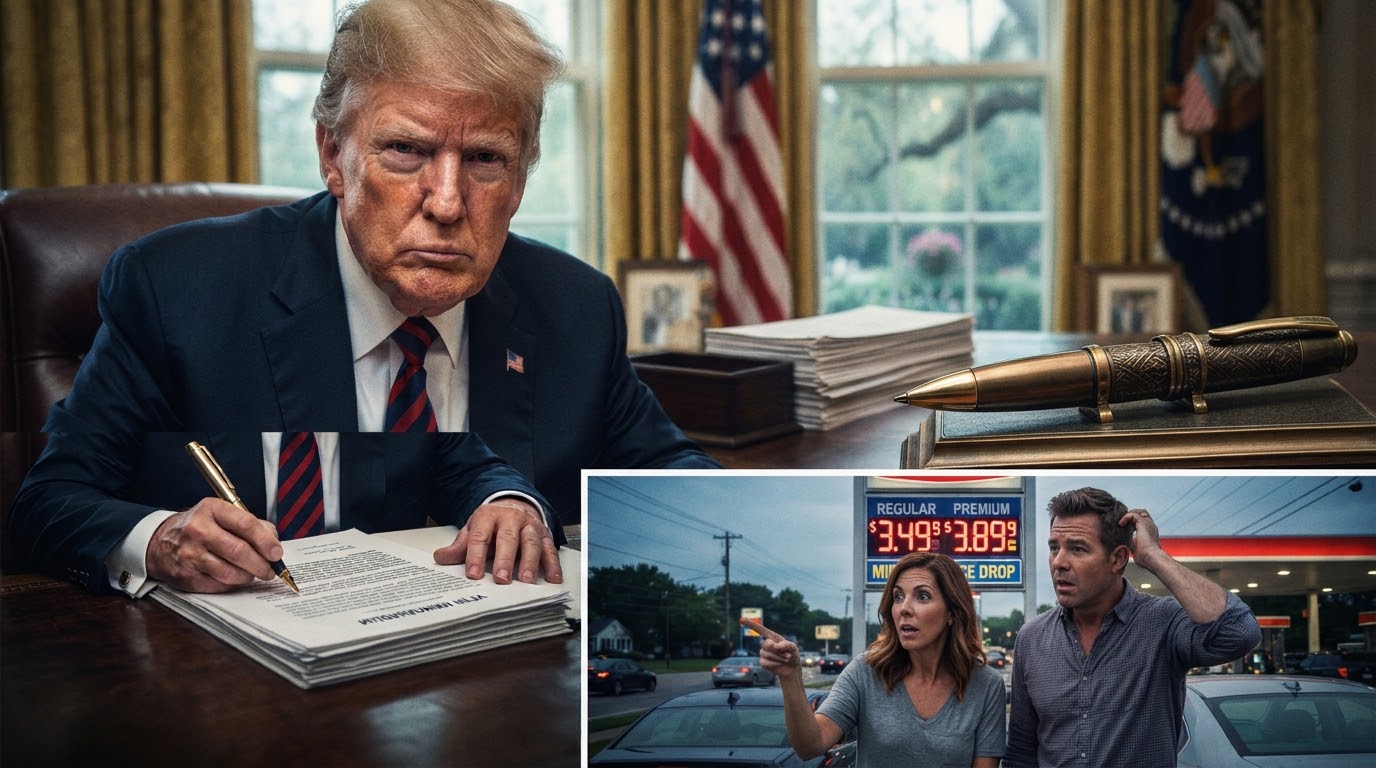
WASHINGTON — Just weeks after sweeping to control of Congress on a campaign centered on “affordability” and lowering the cost of living, incoming Democratic leaders are reportedly weighing sweeping legislative plans to roll back core pillars of President Donald Trump’s economic agenda when they take the gavel in January.
At the top of the Democratic wish list: reversing key provisions of Trump’s signature tax cuts, lowering the expanded federal estate tax exemption, and undoing roughly $1.1 trillion in combined spending reductions to Medicaid and federal food assistance enacted under the administration’s
*One Big Beautiful Bill Act*.
The emerging blueprint has ignited fierce backlash from conservatives and White House allies, who accuse the incoming majority of plotting massive tax hikes and trillion-dollar spending sprees under the banner of economic relief—while setting the stage for an inevitable collision with President Trump’s veto pen.
The $1 Trillion Tug-of-War Over Taxes and Entitlements
During the 2026 midterm campaign, House Democratic Leader Hakeem Jeffries and Senate Democrats hammered Republicans over elevated consumer prices. Now, as party strategists map out their first 100 days in power, the focus is shifting toward dismantling the fiscal framework passed during Trump’s second term.
According to policy analysts and congressional reports, the Democratic agenda targets three major fronts:
* **Corporate and Individual Tax Rates:**
Democrats are actively weighing rollbacks to Trump’s corporate and upper-income tax cuts in 2027 to offset new federal spending—a move Wall Street analysts warn would immediately hit after-tax corporate earnings and ripple through household financial planning.
The Estate Tax Exemption:
Under current law passed in 2025, the federal estate tax exemption sits at $15 million per person. Progressive lawmakers, including Senators Bernie Sanders and Elizabeth Warren, have pushed proposals to slash that threshold—with Sanders proposing a drop to $3.5 million per person—while hiking marginal rates on family estates and trusts.
Medicaid and SNAP Rollbacks:
House and Senate leaders have pledged to “immediately” restore enhanced Affordable Care Act subsidies and reverse deep cuts made to Medicaid ($900 billion over a decade) and the Supplemental Nutrition Assistance Program ($200 billion).
While Democrats frame the move as protecting healthcare and food access for working families, critics point out that reversing the reforms carries a price tag exceeding $1.1 trillion.
Trump Points to Post-Election Gas Drop and Oversight Battles
The legislative battle comes amid heightened partisan friction over the economy and congressional oversight. At a press conference last week, President Trump pointed out that crude oil and retail gasoline prices had plummeted immediately following the November midterms—with national averages dipping below $3.70 a gallon after hovering above $4.30 in September.
“Crude oil prices have plummeted right since the end of the election. I wonder how that happened,” Trump told reporters, suggesting the timing was no coincidence. Energy analysts, however, attribute the drop to seasonal shifts toward winter-blend fuel, reduced autumn driving demand, and cooling geopolitical risk premiums in the Middle East.
Meanwhile, Republicans warn that alongside tax and spending battles, a Democratic-controlled House and Senate will immediately pivot toward aggressive oversight, subpoenas, and investigations targeting the administration—diverting Washington’s focus from economic growth to partisan warfare.
The Ultimate Roadblock: The Veto Pen
Despite the ambitious scope of the Democratic agenda, political realities in Washington mean sweeping changes face a steep uphill climb.
Even if Democrats unite their slim majorities to pass tax hikes or entitlement expansions through both chambers, any bill landing on the Resolute Desk faces an almost certain veto from President Trump. Overriding a presidential veto requires a two-thirds supermajority in both the House and the Senate—a threshold neither party is anywhere near reaching.
As January approaches, Washington is bracing for high-stakes gridlock: a newly empowered Democratic Congress eager to rewrite the tax code and expand federal programs, squared off against a president ready to block every page of it.

Prince William Reportedly Plans to Strip Harry, Meghan, and Their Children of Royal Titles Upon Ascending the Throne

🚨 JUST IN: They ran on “affordability”—now incoming Democrats are weighing plans to roll back Trump’s tax cuts, slash the estate tax exemption, and reverse $1T+ in Medicaid and SNAP cuts come January. Meanwhile, Trump says gas prices conveniently crashed after the midterms. Good thing the veto pen still works. 🇺🇸

BREAKING: President Trump completely falls asleep and farts during the APEC summit in China, but cameras capture the reactions of world leaders behind him, while a microphone accidentally left on picks up something more than just farting, further confirming what Americans have been saying and raising bigger questions about why he is still president

TRUMP’S AI TAX BOMBSHELL! President Threatens Massive Tax Penalties on US Tech Giants Building AI Data Centres Overseas as Fears Grow Over Soaring AI Costs and a Deepening Economic Squeeze Across America!

🚨💔 ROYAL FAMILY DRAMA ERUPTS! 😱 MEGHAN MARKLE’S FATHER, THOMAS, REPORTEDLY MISTAKES HER FOR HIS ‘SISTER’ DURING A DISTURBING PSYCHIATRIC INTERVIEW ABOUT FAMILY DISPUTES! 💔 After a joyful outing with Prince Harry and their children, Meghan is reportedly left devastated by her father’s shocking accusations — BUT THE BIGGEST HEARTBREAK COMES WHEN HARRY ALLEGEDLY REFUSES TO COMFORT HIS TEARFUL WIFE AND CHILDREN! 😢👑 What began as a happy family day reportedly ends in sorrow!

🚨😱 NIGHTMARE IN THE BAHAMAS! TAYLOR SWIFT SPOTTED ON SECRET GETAWAY WITH MYSTERY MAN AFTER CMA AWARDS — BUT A HORRIFYING SHIPWRECK TURNS THEIR VACATION INTO CHAOS! 💔🚢 TAYLOR RUSHED TO HOSPITAL AS THE MYSTERY MAN IS LEFT IN TEARS! 😭 WHAT REALLY HAPPENED?

THEY DIDN’T SEE THIS COMING! Taylor Swift Stuns in a Bright Yellow Oscar de la Renta Gown at the CMA Awards, but Travis Kelce STEALS THE SHOW in a Head-Turning Crimson-Red Velvet Suit That Has Fans Doing a Double Take!

MIN AGO: King Charles Hospitalized In Critical Condition After Receiving Devastating News About His Son💔…..

😱👑 ROYAL BOMBSHELL! PRINCE HARRY ALLEGEDLY CAUGHT WITH A MYSTERY WOMAN — AND HER SUPPOSED CONNECTION TO HIS ROMANTIC PAST SPARKS SHOCK! Viral rumors claim leaked CCTV shows Harry arriving with a woman who isn’t Meghan — but WAS SHE REALLY ONCE CONSIDERED HIS FUTURE WIFE? The mysterious footage and her identity… 👇👇

🚨👑 “WE HAVE WAITED FOR THIS MOMENT FOR SO MANY YEARS… AND FINALLY, THE MIRACLE HAS ARRIVED!” — PRINCE WILLIAM AND PRINCESS KATE MOVE BRITISH ROYAL FANS WITH SOME VERY SPECIAL GOOD NEWS. But what makes everyone most curious is the reaction of their three children, George, Charlotte and Louis, when they discover the secret their parents have kept hidden for so long

🔥🚨 AT 56, TARAJI P. HENSON JUST WALKED IN AND THREW THE RULEBOOK OUT THE WINDOW! Her BOLD, UNEXPECTED LOOK Has Everyone Staring — FASHION STATEMENT OF THE YEAR OR A RED-CARPET REBELLION? SOCIAL MEDIA IS DIVIDED! 😱🔥
