
CELEBRITY
Kayleigh McEnany airs the accounts of Warren Hudson, Jax Pitalo, and Morgan Seymour, who say online claims that white friends killed Nolan Wells produced real-world intimidation even after investigators and a grand jury found no evidence of foul play.

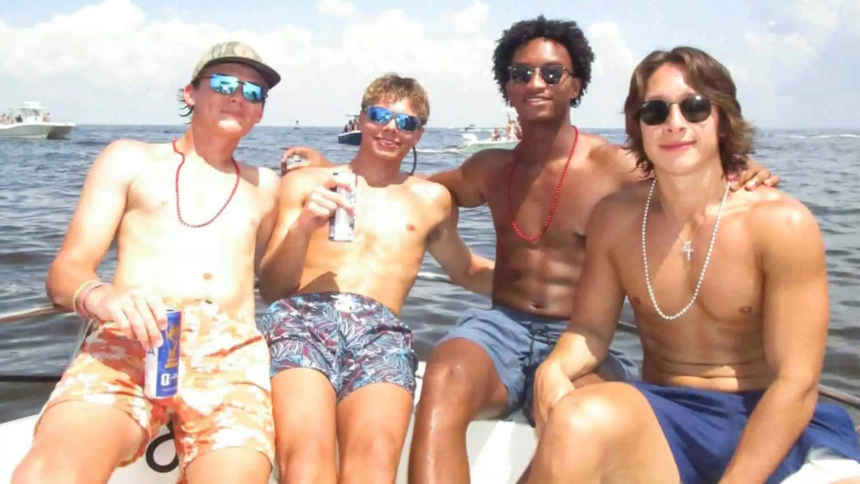
Nolan Wells’ Friends Speak Out About Threats After Online Claims Fueled Intimidation
Friends of Nolan Wells who were with him during the July 4 boating trip that preceded his death are speaking publicly about the harassment and threats they say followed intense speculation surrounding the case.
Warren Hudson, Jax Pitalo and Morgan Seymour discussed the experience with Fox News host Kayleigh McEnany in an interview scheduled to air on Saturday in America, describing what they say has been a wave of intimidation directed not only at them but also at their families.
Hudson said he has received what he described as thousands of death threats. He said the harassment has extended to members of his family, including his stepmother, who is a chancery court judge, as well as his parents and other relatives.
Pitalo said he too had received threats, including alleged bomb threats, while Seymour said he had experienced similar intimidation.
The comments come after months of intense online speculation about what happened to Wells, an 18-year-old Black college student whose body was discovered near Horn Island, Mississippi, on July 6, two days after he went there with friends for a Fourth of July gathering.
Grand jury finds no evidence of criminal wrongdoing
The case generated widespread attention after Wells’ friends returned to the mainland without him. Online discussions increasingly focused on the fact that Wells was Black while several of the friends who accompanied him were white.
Those circumstances fueled claims on social media that Wells may have been the victim of foul play or a racially motivated crime.
However, a Jackson County grand jury later reviewed evidence from the investigation and declined to bring criminal charges. The panel examined witness testimony, physical evidence, GPS information, cellphone records, videos and investigative material.
The grand jury concluded that there was no credible evidence that the people who traveled to or from Horn Island with Wells had engaged in criminal conduct connected to his death. It also found no evidence establishing that his death was racially motivated.
The panel said the circumstances surrounding Wells’ body were consistent with drowning, while noting that the precise cause of death remained undetermined.
Questions from Wells’ family remain
The grand jury’s decision has not ended the controversy.
Wells’ family and their attorneys have continued to question aspects of the investigation and have called for additional scrutiny. They have pointed to injuries documented during autopsies and raised questions about the circumstances surrounding Wells’ disappearance and the handling of his cellphone.
The family has also continued to seek answers about how Wells died, while authorities have maintained that the investigation did not uncover evidence supporting criminal charges.
That distinction is important: the grand jury’s decision means prosecutors did not find sufficient evidence to charge Wells’ friends with a crime; it does not provide the family with a definitive explanation for every unanswered question surrounding his death.
Friends say online accusations had real consequences
For Hudson, Pitalo and Seymour, however, the controversy has moved beyond online discussion.
According to their accounts, accusations circulating online resulted in threats against them and people close to them. Their attorneys have previously spoken about alleged threats against their clients, and the friends now say their families have also been caught up in the backlash.
The situation illustrates how rapidly speculation surrounding a high-profile death can move from social-media posts into the real world. Allegations can spread before investigators have completed their work, potentially affecting people who have not been charged with or found responsible for a crime.
At the same time, Wells’ family and supporters have maintained that the questions surrounding his death deserve serious examination, particularly because the official findings did not establish a definitive cause of death.
A case that remains deeply contested
The Wells case therefore continues to carry two separate issues: the unanswered questions surrounding the young man’s death and the consequences of accusations made against those who were with him.
The grand jury found no evidence of criminal wrongdoing by Wells’ friends and no evidence that his death was racially motivated.
Meanwhile, Wells’ family continues to seek further answers about the circumstances of his death.
As the debate continues, the accounts from Hudson, Pitalo and Seymour underscore another consequence of the case: they say that online accusations did not remain confined to social media but translated into threats and fear for them and their relatives.
For now, no criminal charges have been brought against Wells’ friends in connection with his death. The case has nevertheless remained the subject of intense public attention, with Wells’ family seeking greater transparency while his friends attempt to defend themselves against accusations they say have put their lives and families at risk.

Love is in the Air: Inside Taylor Swift and Travis Kelce’s Ultra-Luxury Private Jet to celebrate their love life…

SHOCKING MOMENT ON THE RED CARPET! What started as an innocent slip quickly turned into a heated confrontation between Travis Kelce and Jimmy Kimmel, unfolding before hundreds of cameras. The situation escalated so rapidly that security barely had time to react. Watch the full video and uncover the complete story below…

“They’re So Nasty!” Wright Family Under Fire as Old TOWIE Drama and Alleged Mean-Girl Behaviour Resurface

CELEBRITYKanye West’s wife Bianca Censori shocks once again as she goes braless in a sheer thong leotard as the couple step out in Switzerland…Published 1 day ago on June 19, 2026By Gisela Osbeck

JADEN SMITH WANTED TO BE SUPERMAN SO BAD. 😭💀 BRO, THE BEACH IS NOT THE GYM. 😂

Kylie Jenner makes shock runway appearance at the 2026 Victoria’s Secret Fashion Show

Miley Cyrus was spotted with a baby bump alongside her fiancé Maxx Morando, as they left the hospital. Wait a minute! I thought she said she didn’t want to experience pregnancy? 😭😂

Jennifer Lopez Candidly Admits She “Would Have Had Sex With” Any One of These Celebrities

BREAKING: Jennifer Lopez Is Engaged Again… and Her New Fiancé Is a Total Curveball! JLo’s Surprise Proposal Goes Viral—Fans Can’t Handle Who She’s Marrying Now and you better sit down, because you might recognize him…

Taylor Swift Turns Up the Heat as She Flaunts Her Toned Bikini Body While Sharing a Passionate Kiss With Shirtless Husband Travis Kelce During a Dreamy Luxury Yacht Escape Ahead of …

Kourtney Kardashian Reveals Kanye West’s Dating Advice About “Hooking Up With Randoms”
