
CELEBRITY
TRUMP’S AI TAX BOMBSHELL! President Threatens Massive Tax Penalties on US Tech Giants Building AI Data Centres Overseas as Fears Grow Over Soaring AI Costs and a Deepening Economic Squeeze Across America!

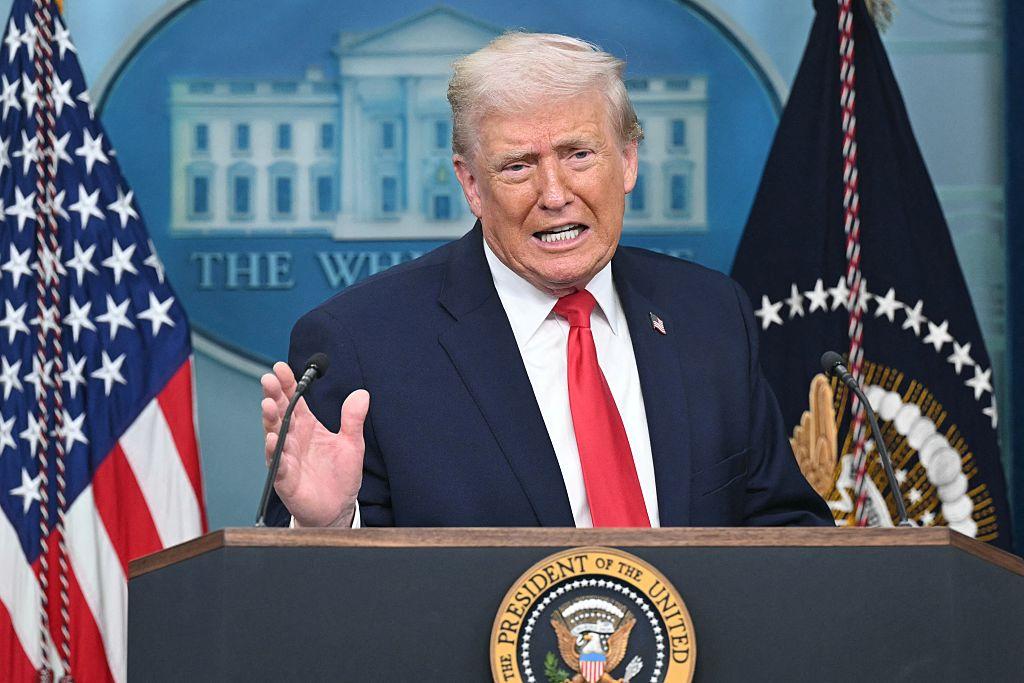
President Donald Trump has delivered a strong warning to America’s technology industry, threatening major tax penalties against US companies that build artificial intelligence data centres outside the country.
Speaking during a White House press conference on Friday, November 20, 2026, Trump signalled that his administration wants American technology companies to keep their massive AI infrastructure investments within US borders rather than expand their operations overseas.
The president warned that companies choosing to construct data centres in other countries could face what he described as a “tremendous tax,” raising the possibility of a significant confrontation between the White House and some of America’s biggest technology businesses.
Trump also suggested that overseas construction could potentially be prohibited, although he did not announce a formal policy or provide details about how such restrictions would be implemented.
Trump Sends a Strong Message to America’s Tech Giants
The president’s remarks reflect his determination to make the United States a leading destination for artificial intelligence investment.
Trump has repeatedly promoted domestic data centre construction, arguing that these facilities can generate economic growth, attract investment and strengthen America’s technological position against international competitors, particularly China.
During Friday’s briefing, he urged American communities to welcome data centre developers while negotiating financial benefits for local residents.
He argued that communities should take advantage of the economic opportunities rather than automatically reject proposed construction projects.
However, his latest warning introduces a tougher approach: American companies may face financial consequences if they choose to build critical AI infrastructure abroad.
Why Overseas AI Data Centres Matter
Artificial intelligence data centres are essential to the technology industry’s expansion. They provide the computing power required to train and operate increasingly sophisticated AI systems.
Major technology companies rely on facilities across different countries to serve international customers, reduce delays in data transmission and meet local regulatory requirements.
Consequently, restrictions on overseas construction could create significant challenges for companies with international expansion plans.
Businesses involved in developing and operating data centres could also face uncertainty as they assess the potential financial and regulatory consequences of Trump’s proposed approach.
A Potential Clash Between Washington and Big Tech
Trump’s announcement could open another major debate about the relationship between the federal government and America’s technology giants.
Supporters of his position may argue that keeping AI infrastructure within the United States protects American jobs, strengthens national competitiveness and ensures that more economic benefits remain at home.
Critics, however, could question whether imposing substantial penalties on overseas investments would discourage international expansion, increase operating costs or create complications for American companies competing in the global technology market.
There is also a practical question about how the proposed tax would work.
Importantly, Trump did not announce a tax rate, implementation timetable or detailed enforcement mechanism. He also acknowledged that he had not yet discussed the proposal with his administration officials.
The threat therefore remains a political announcement rather than an implemented tax policy.
What Happens Next?
The technology industry will be watching closely to see whether Trump’s remarks develop into a formal proposal.
Any eventual policy could raise questions about international investment, corporate expansion, American competitiveness and the future location of the infrastructure powering artificial intelligence.
For now, the president has made his position clear: he wants American technology companies building more of their AI infrastructure at home.
Whether that ambition can be achieved through financial penalties without creating unintended consequences remains to be seen.
One thing is certain: Trump’s latest warning has placed America’s technology giants on notice and opened another major debate over who controls the future of the global AI industry.

TRUMP’S AI TAX BOMBSHELL! President Threatens Massive Tax Penalties on US Tech Giants Building AI Data Centres Overseas as Fears Grow Over Soaring AI Costs and a Deepening Economic Squeeze Across America!

🚨💔 ROYAL FAMILY DRAMA ERUPTS! 😱 MEGHAN MARKLE’S FATHER, THOMAS, REPORTEDLY MISTAKES HER FOR HIS ‘SISTER’ DURING A DISTURBING PSYCHIATRIC INTERVIEW ABOUT FAMILY DISPUTES! 💔 After a joyful outing with Prince Harry and their children, Meghan is reportedly left devastated by her father’s shocking accusations — BUT THE BIGGEST HEARTBREAK COMES WHEN HARRY ALLEGEDLY REFUSES TO COMFORT HIS TEARFUL WIFE AND CHILDREN! 😢👑 What began as a happy family day reportedly ends in sorrow!

🚨😱 NIGHTMARE IN THE BAHAMAS! TAYLOR SWIFT SPOTTED ON SECRET GETAWAY WITH MYSTERY MAN AFTER CMA AWARDS — BUT A HORRIFYING SHIPWRECK TURNS THEIR VACATION INTO CHAOS! 💔🚢 TAYLOR RUSHED TO HOSPITAL AS THE MYSTERY MAN IS LEFT IN TEARS! 😭 WHAT REALLY HAPPENED?

THEY DIDN’T SEE THIS COMING! Taylor Swift Stuns in a Bright Yellow Oscar de la Renta Gown at the CMA Awards, but Travis Kelce STEALS THE SHOW in a Head-Turning Crimson-Red Velvet Suit That Has Fans Doing a Double Take!

MIN AGO: King Charles Hospitalized In Critical Condition After Receiving Devastating News About His Son💔…..

😱👑 ROYAL BOMBSHELL! PRINCE HARRY ALLEGEDLY CAUGHT WITH A MYSTERY WOMAN — AND HER SUPPOSED CONNECTION TO HIS ROMANTIC PAST SPARKS SHOCK! Viral rumors claim leaked CCTV shows Harry arriving with a woman who isn’t Meghan — but WAS SHE REALLY ONCE CONSIDERED HIS FUTURE WIFE? The mysterious footage and her identity… 👇👇

🚨👑 “WE HAVE WAITED FOR THIS MOMENT FOR SO MANY YEARS… AND FINALLY, THE MIRACLE HAS ARRIVED!” — PRINCE WILLIAM AND PRINCESS KATE MOVE BRITISH ROYAL FANS WITH SOME VERY SPECIAL GOOD NEWS. But what makes everyone most curious is the reaction of their three children, George, Charlotte and Louis, when they discover the secret their parents have kept hidden for so long

🔥🚨 AT 56, TARAJI P. HENSON JUST WALKED IN AND THREW THE RULEBOOK OUT THE WINDOW! Her BOLD, UNEXPECTED LOOK Has Everyone Staring — FASHION STATEMENT OF THE YEAR OR A RED-CARPET REBELLION? SOCIAL MEDIA IS DIVIDED! 😱🔥

The Prince and Princess of Wales have held a bilateral meeting with the Indian Prime Minister at his private residence in Delhi Her Royal Highness was wearing a suit by acclaimed Indian couturier Gaurav Gupta

🚨 ROYAL EMERGENCY! Prince William and Princess Catherine Reportedly Rushed for Urgent Medical Attention Following a Terrifying Pottery Accident! 😱 King Charles Left Deeply Concerned as Palace Watchers Await Updates. But What Happened Moments After Catherine Was Injured by a Sharp Carving Tool and Exposed to Pottery Dust Has Sparked Fresh Worries About Her Wellbeing…

🚨😱THIS IS UNACCEPTABLE, SO DISGUSTING!” Prince Harry and Meghan Viral Beach Photo Sparks Fierce FANS War as Body-Shaming Backlash Debate Takes Over Social Media….
